Hosted video API for agents: what to check before you wire one up
An agent can fire a render job every thirty seconds. What matters is what comes back, where it is stored, and how much of the edit you can still change. Here is how to read a hosted video API before you wire it into an agent.
Agents are good at the mechanical half of video work. Cut on the beat, push captions onto every clip, swap the product shot, render the same edit at three aspect ratios. They are weak at the half that needs taste. A hosted video API sits right on that line. It gives an agent a way to do the mechanical passes without you running render infrastructure, and it quietly decides how much of the creative call gets handed back to you.
The word "hosted" is doing a lot of work there. It means someone else runs the encoder, the queue, and the storage. It also means your agent inherits their timeouts, their retention policy, their concurrency ceiling, and their opinion about what a finished video is. Most of the pain in agent video pipelines comes from those four things, not from the model that generated the footage.
In short
- Decide whether you need a rendered file back or an editable project back. That one choice drives every other decision.
- Insist on an async job model with webhooks. Long renders and open HTTP connections do not mix.
- Read the retention and URL expiry rules before your agent stores anything. Assets disappear quietly.
- Pin the output matrix (aspect ratios, captions, codecs) up front so the agent is not re-rendering to fix framing.
- Keep a human on the final pass. An agent cannot see that a caption is sitting on someone's mouth.
Quick answer:
- A hosted video API for agents is a remote endpoint that takes a job description (clips, text, audio, timing) and returns either a rendered video or an editable project the agent can revise.
- The three specs that matter most are the async job model, asset retention, and whether the response is a baked MP4 or a timeline you can still open and change.
- Give the agent the repeatable passes (assembly, captions, resizes, versions). Keep framing, pacing, and the final look with a person.
What hosted actually buys you
Rendering video yourself is fine until the second concurrent job shows up. Then you are maintaining an encoder build, a job queue, a GPU or a fleet of CPU workers, a retry policy, and a storage bucket with a lifecycle rule. None of that is the interesting part of your product. A hosted API takes the queue and the encoder off your plate and gives you one endpoint plus a status callback.
What it does not take off your plate is the edit itself. An API can stitch three clips, drop a title card, and normalize audio, but it cannot decide that the second clip is a second too long. Plan for that split from the start. If your pipeline mostly does deterministic assembly work, like joining segments in a fixed order, a straightforward video merging tool covers more cases than a bespoke render service.
Baked file or editable timeline
This is the question people skip and regret. Most video APIs return an MP4. That is fine for a one shot render and terrible for anything an agent is going to iterate on, because every revision means a full re-render from the original inputs. Change one caption and you pay for the whole video again.
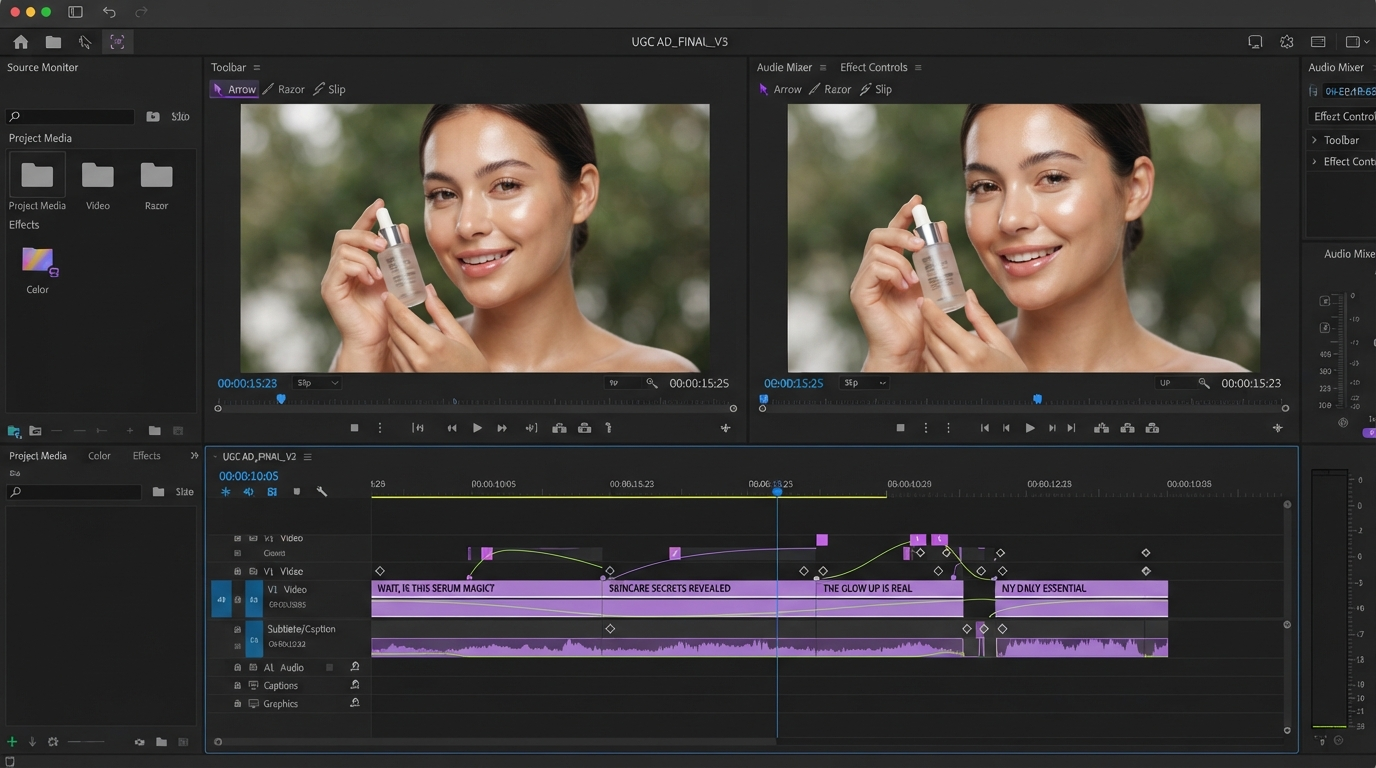
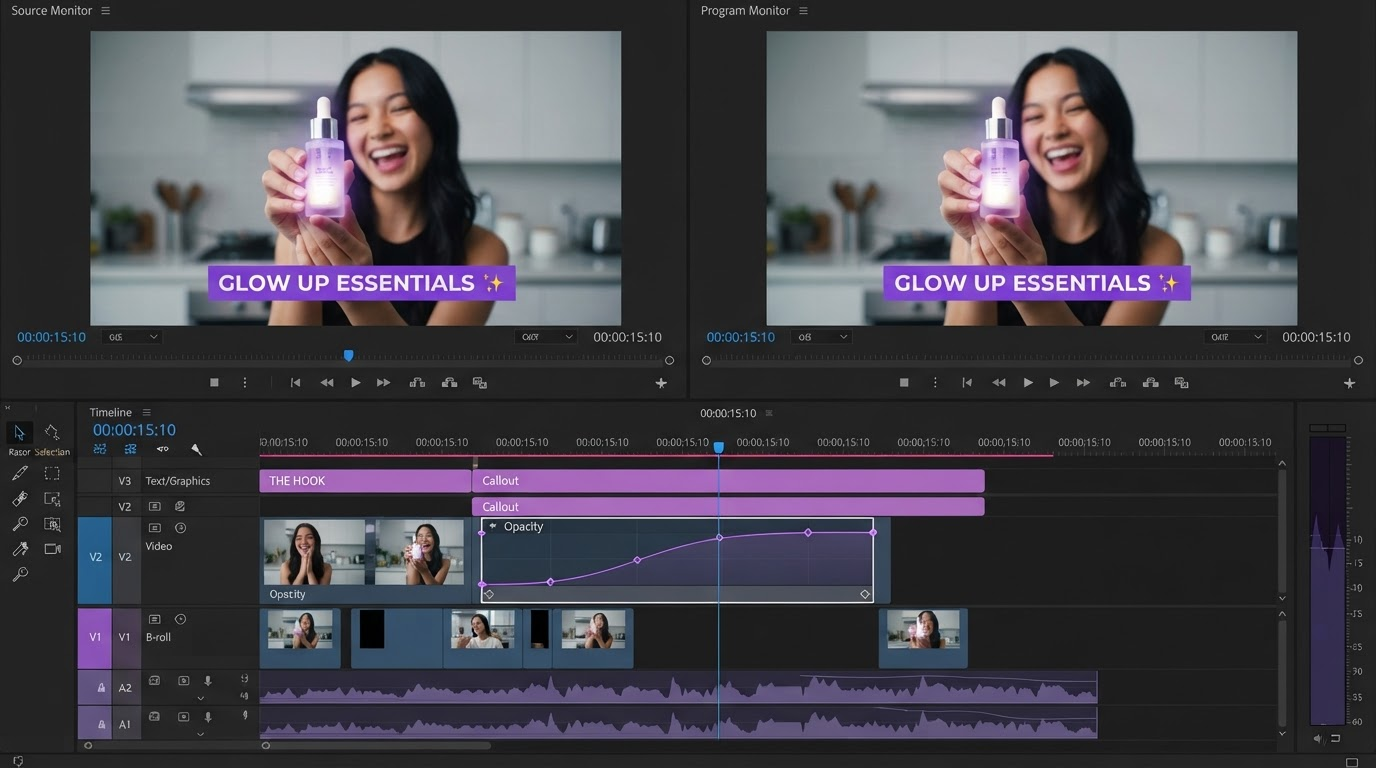
The alternative is an API that returns structure: layers, tracks, clip in and out points, keyframes, easing curves. The agent sets the timing and you open the result and art direct it. That is the model Motionbox is built around, and it is what makes agent output reviewable instead of disposable. When more than one person has to sign off on the cut, browser based collaborative editing beats mailing MP4 files around, because the reviewer can move the thing they are complaining about instead of describing it.
The job model: webhooks, retries, and idempotency
Assume every render is slow. A thirty second social clip with captions and a music bed can take a minute or more of wall clock time, and agent frameworks tend to time out long before that. The pattern that survives contact with production looks like this:
- POST the job spec, get back a job id and a queued status immediately.
- Register a webhook so completion pushes to you instead of your agent polling in a loop.
- Keep polling as a fallback, with backoff, for the times a webhook gets lost.
- Send an idempotency key with every job so a retrying agent does not render and bill the same video twice.
That last point is the one that bites. Agents retry on any error they do not understand, including a timeout that fired while the render was still succeeding. Without an idempotency key you get duplicate jobs, duplicate charges, and two files that are almost the same.
Where the files live, and for how long
Hosted means the output starts life in someone else's bucket, usually behind a signed URL with an expiry. Agents love to store that URL in a database and treat it as permanent. It is not. Copy the asset to storage you control the moment the job completes, and store your own URL alongside the provider job id so you can trace a file back to the spec that made it.
Check the free tier terms too, because they usually shape the file. Most hosted renderers watermark free output, which means a test render is not a shippable render. If you need clean output at test time, budget for the paid tier, and if you want your own mark on finished video instead, handle it as an explicit step with a video watermark tool rather than accepting whichever badge the provider stamps on.
Captions, aspect ratios, and the output matrix
Agents ask for more variations than humans do, so define the matrix before the first call rather than after. For a typical social pipeline that means 9:16 and 1:1 at minimum, sometimes 16:9 for the same edit, each with captions burned in. Two details are worth deciding early.
First, burned in captions versus a sidecar SRT. Burned in survives every platform and cannot be turned off, which is what you want for feed video. A sidecar file stays editable and translatable, which is what you want for anything long form. Doing captions as a real layer, the way video subtitle tools treat them, keeps both options open, because the text is still text until you flatten it.
Second, safe areas. Reframing 16:9 to 9:16 will crop into your composition, and an agent will happily ship a title card with the last two words cut off. If the API can return the crop it chose, log it. If it cannot, render a contact sheet of first frames and eyeball the batch.
Generation first, then finishing
Plenty of agent video pipelines have two halves. The first half makes footage that did not exist before, from a text prompt, a product photo, or a script. The second half turns that raw material into something with pacing, captions, and a hook in the first second.
If the generation half is where you are spending your time, chaining model calls by hand and gluing responses together, a visual builder like wireflow.ai lets you wire that chain once and then trigger the whole thing from an agent with a single call. The finishing half then only has to handle assembly, timing, and the final look, which is a much smaller and much more testable surface.
Cost, concurrency, and the parts a person still owns
Hosted render pricing is usually per minute of output, per minute of processing, or per job, and the three behave very differently under an agent that likes to retry. Per job pricing is easiest to reason about. Per processing minute punishes long source files, so trim before you send rather than after.
Concurrency is the other budget. Providers cap parallel jobs, and an agent fanning out twenty variants at once will hit that cap and start failing in ways that look like network errors. Queue on your side, keep the fan out modest, and treat a 429 as a signal to slow down instead of a reason to retry immediately.
Then keep the last pass human. Look at the first frame, the caption placement, and the cut points. That is a two minute review that catches the failures an agent structurally cannot see. For repeatable formats where the layout is already settled, something like a product video maker gives the agent a fixed frame to fill, which shrinks the review to a yes or no.
Frequently asked questions
What is a hosted video API for agents?
It is a remote endpoint an AI agent can call to assemble, edit, or render video without running any encoding infrastructure itself. The agent sends a job description, the service queues and renders it, and the result comes back as a file or as an editable project.
Should the API return an MP4 or a project file?
Return a project file if anything downstream will be revised, which is almost always true when an agent is driving. A baked MP4 forces a full re-render for every small change. An editable timeline lets you fix one caption in seconds.
How do I stop an agent from rendering the same video twice?
Send an idempotency key derived from the job spec, and have your API return the existing job when it sees a repeat. Agents retry aggressively on timeouts, and a slow render looks exactly like a failure from the outside.
Do I still need a video editor if the API does the work?
Yes, for the final pass. Agents handle timing, versions, and repetition well. They cannot judge whether a cut lands or whether a caption is covering a face, so an editor stays in the loop for review even when nobody is dragging clips by hand.
Is free rendering usable in production?
Usually not directly, because free tiers watermark output. They are good for validating the shape of your job spec and your webhook handling, which is the part that actually breaks. Move to a paid tier before you ship anything customer facing.
The short version
Pick the hosted video API by its job model, its retention rules, and what it hands back, in that order. Async with webhooks, storage you can copy out of, and an editable result rather than a finished file will carry an agent pipeline much further than a slightly better render engine will. Let the agent do the repeated passes, and keep the last look for yourself.
Founder of Motionbox and Gluely. Building tools for creators.