Best Video API for Coding Agents: 5 Options Ranked for 2026
An agent fires a render at 3am, loses the connection, and retries. Here are the five video APIs that survive that, ranked by how little glue code they need.
Coding agents changed what a video API has to survive. A human clicks render, watches a spinner, and retries when something breaks. An agent fires a request at 3am, gets disconnected, retries the same call twice, then has to tell the next step in its loop what it actually produced.
Every tool below can render video from an API call. What separates them is how they behave when nobody is watching: whether jobs come back as pollable IDs, whether webhooks are signed, whether a duplicated call bills you twice. If you plan to hand the result to a real editor afterwards, the ordering below will save you a rewrite.
The list at a glance
- fal - Best for raw model access with a queue API that agents can poll or webhook.
- Wireflow - Best for multi-step pipelines you build visually, then call as one endpoint.
- Hedra - Best for typed SDKs, signed webhooks, and idempotent job handling.
- Mux - Best for what happens after generation: storage, encoding, delivery, and playback.
- Shotstack - Best for programmatic edits described as a JSON timeline.
Quick answer:
- For a single model call inside an agent loop, fal is the shortest path: submit to the queue, get a request ID back, poll or receive a webhook, no session state to hold.
- For anything with more than two steps (script, then shots, then a join), build the chain once and call it as one endpoint instead of writing five sequential calls with your own retry logic between them.
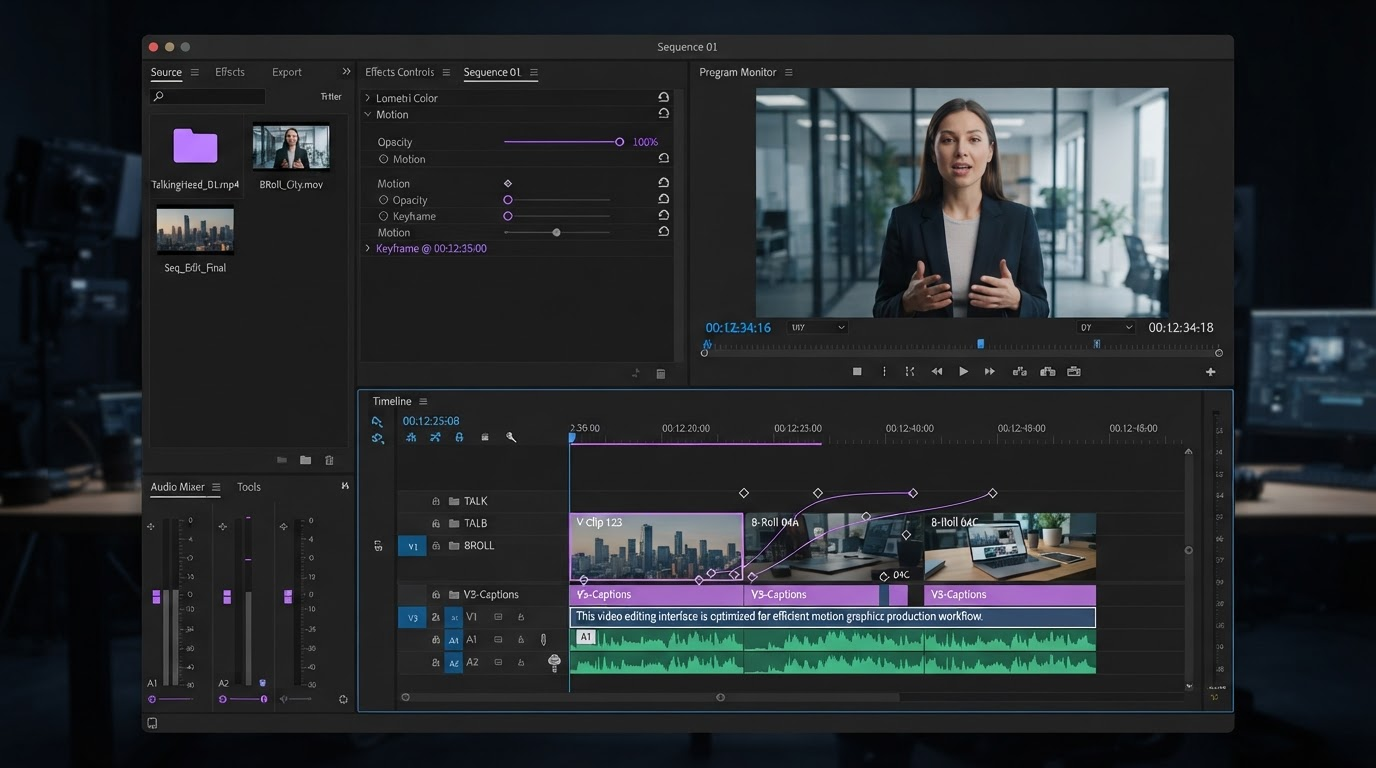
- For finishing work, do not ask the video API to be your editor. Bring the render into a timeline where captions, trims, and brand assets are movable layers.
How we ranked these
Four things decided the order. Async behavior: does the API return a job ID immediately, or hold a connection open for four minutes and time out behind a proxy. Retry safety: if your agent sends the same request twice, do you pay twice. Output shape: a stable JSON structure with a durable file URL, or a signed link that expires before your next step runs. And cost predictability, because an agent that loops has no instinct for when a run is getting expensive. Ranking criterion in one line: how little glue code an agent needs to run a video job end to end without a human checking on it.
1. fal
fal is the closest thing to a default for model calls from code. You submit a job to the queue endpoint, get a request ID back straight away, and either poll the status URL or register a webhook. That pattern maps cleanly onto an agent loop: no long-lived connection to babysit, no partial state to reconcile if the process restarts. The catalog covers most of the video generators worth calling in 2026, and switching between them is usually a string change in the model path rather than a new integration.
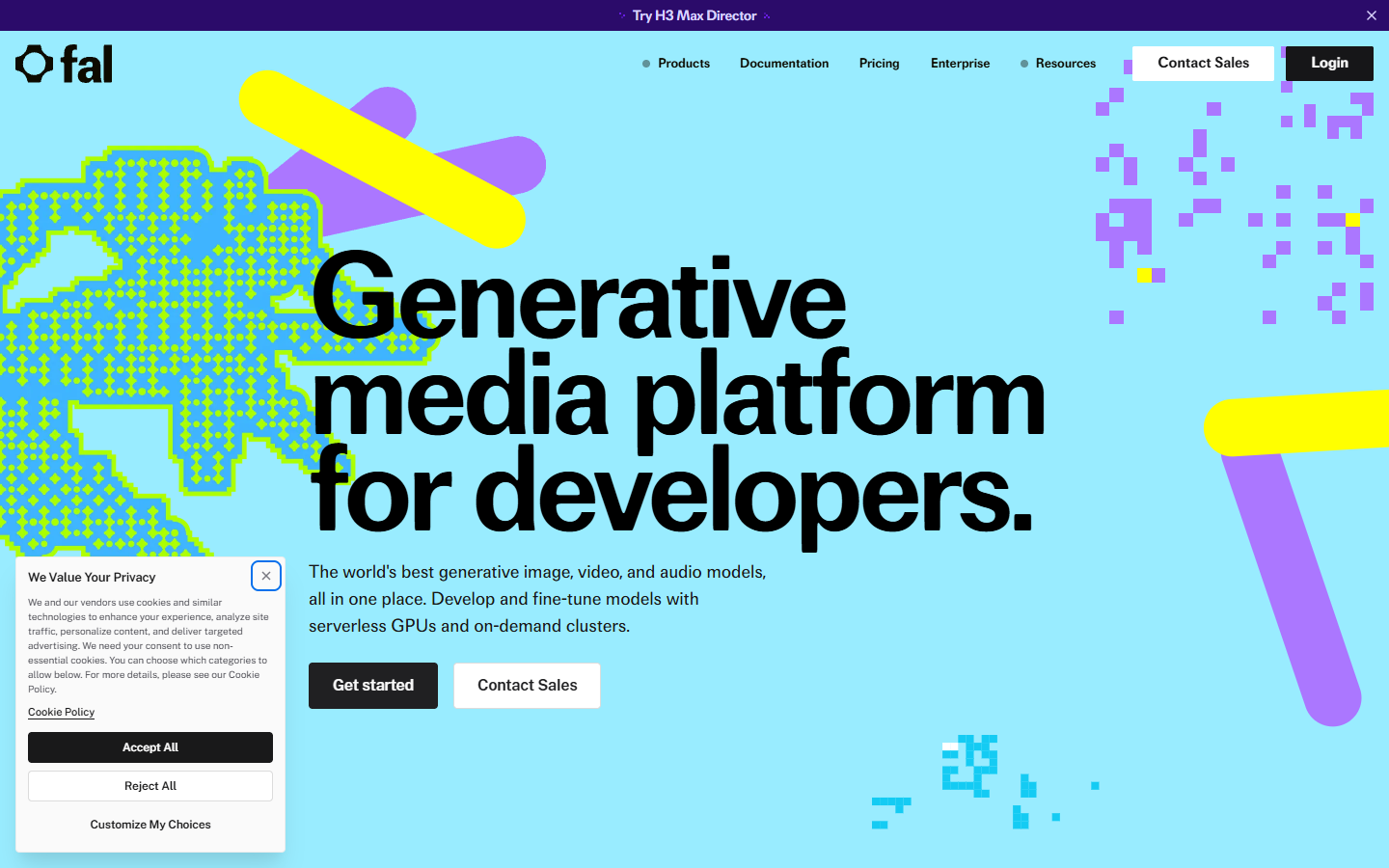
Where it stops short is orchestration. fal runs the model you asked for. If your job is really five jobs (write the beats, generate three shots, generate a voiceover, stitch them in order), you write that sequencing yourself, including the retry policy and the intermediate storage. Fine for one generation step, tedious for a pipeline.
Verdict: Best for agents that need one model call to be fast, cheap, and boring.
2. Wireflow
Wireflow inverts the problem. Instead of your agent orchestrating a chain of API calls, you build the chain visually on a node canvas and publish the finished graph as a callable REST endpoint. The concrete step: assemble the pipeline, mark the inputs you want to vary (hook text, product image, aspect ratio) as runtime inputs, publish, then have the agent POST those inputs to one URL and poll one job ID. Wireflow's own breakdown of video APIs built for unattended agent runs covers the async and idempotency details worth checking before you wire the endpoint in.
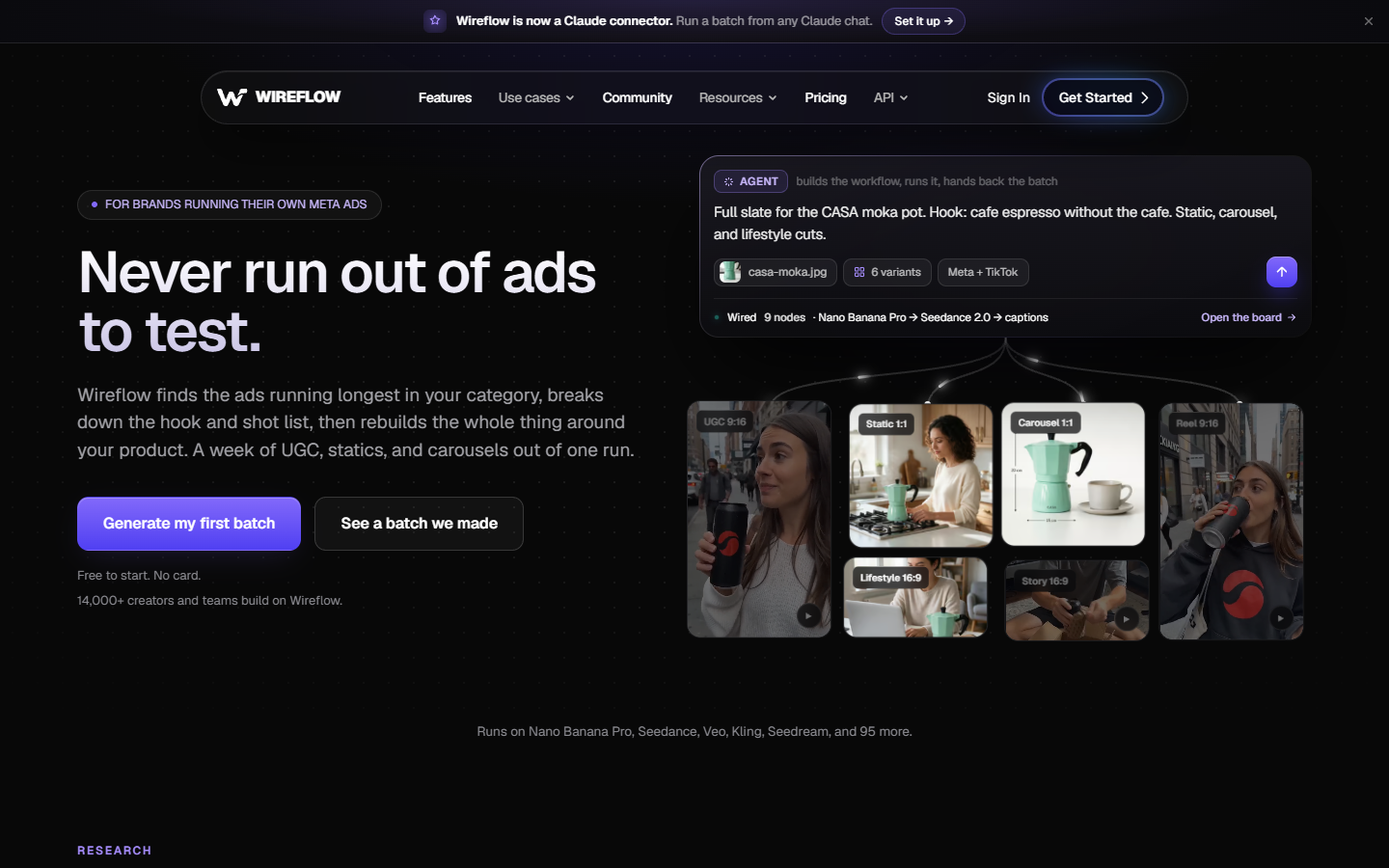
The practical benefit is that the pipeline stops living inside your prompt. When a shot needs a different model or an extra upscale pass, you change the graph, not the agent code, and the endpoint contract stays the same. The failure surface shrinks too: one call, one job ID, one webhook, rather than five calls each with their own timeout behavior.
The honest limit is that this is a generation and orchestration layer, not a finishing suite. Caption timing, brand kit application, and the last round of trims still belong in an editor.
Verdict: Best for agents running multi-step video builds that would otherwise be five brittle API calls.
3. Hedra
Hedra has spent the most visible effort on the parts of an API that only matter when nobody is watching: typed SDKs, live progress events, signed webhook payloads, idempotent job creation, and cost estimates you can read before you commit. If your agent runs on a schedule and a duplicate charge is a real problem, that combination beats another twenty models in the catalog.

It is narrower than fal. You work inside Hedra's own inference stack rather than a broad open catalog, which is a fair trade if character and avatar work is your main output.
Verdict: Best for scheduled, unattended runs where retry safety and billing predictability matter most.
4. Mux
Mux is not a generator, and that is the point. Once your agent has produced a file, something has to store it, encode it, serve it at a sane bitrate, and tell you how many people watched. Mux does that through a developer REST API, and it now ships an MCP server so an agent can operate the video stack directly rather than through a wrapper you maintain.
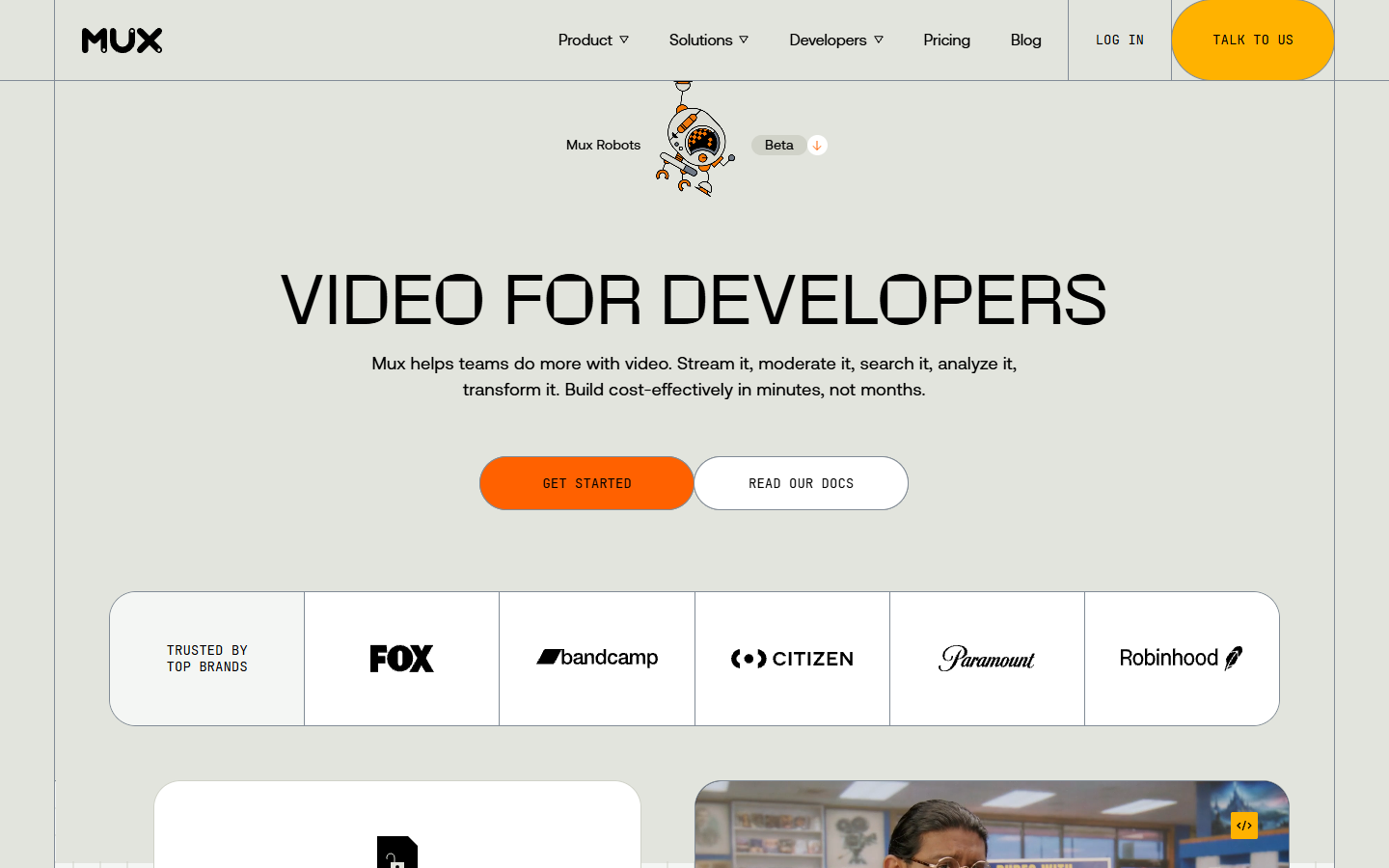
Pair it with any generator above: generate with fal or Wireflow, finish the edit, push the master to Mux. Treating generation and delivery as separate concerns keeps each one replaceable, which matters more than it sounds when a model gets deprecated.
Verdict: Best for the delivery half of an agent pipeline, not the creative half.
5. Shotstack
Shotstack lets you describe an edit as JSON: tracks, clips, in and out points, transitions, and text overlays, posted to a render endpoint that returns a job ID. The edit becomes data, so your agent can generate the timeline description, validate it, and render it without touching a UI.
The catch is that a JSON timeline is only as good as the person writing it, and agents write mediocre timelines. Shotstack will faithfully render whatever you describe, including a version where every cut lands a beat late. Use it where the structure is fixed and only the assets change, such as a listing video or a weekly recap.
Verdict: Best for high volume templated renders where the timeline shape never changes.
What agents still hand back to a human editor
Every option above returns a file. None of them returns an opinion. Three things consistently need a human pass: caption timing, shot order, and brand consistency. Auto generated subtitles land close but rarely on the syllable, so plan for a step where you nudge cue timing instead of accepting the transcript as final. Motionbox handles that pass in the browser with editable video subtitles, no re-render.
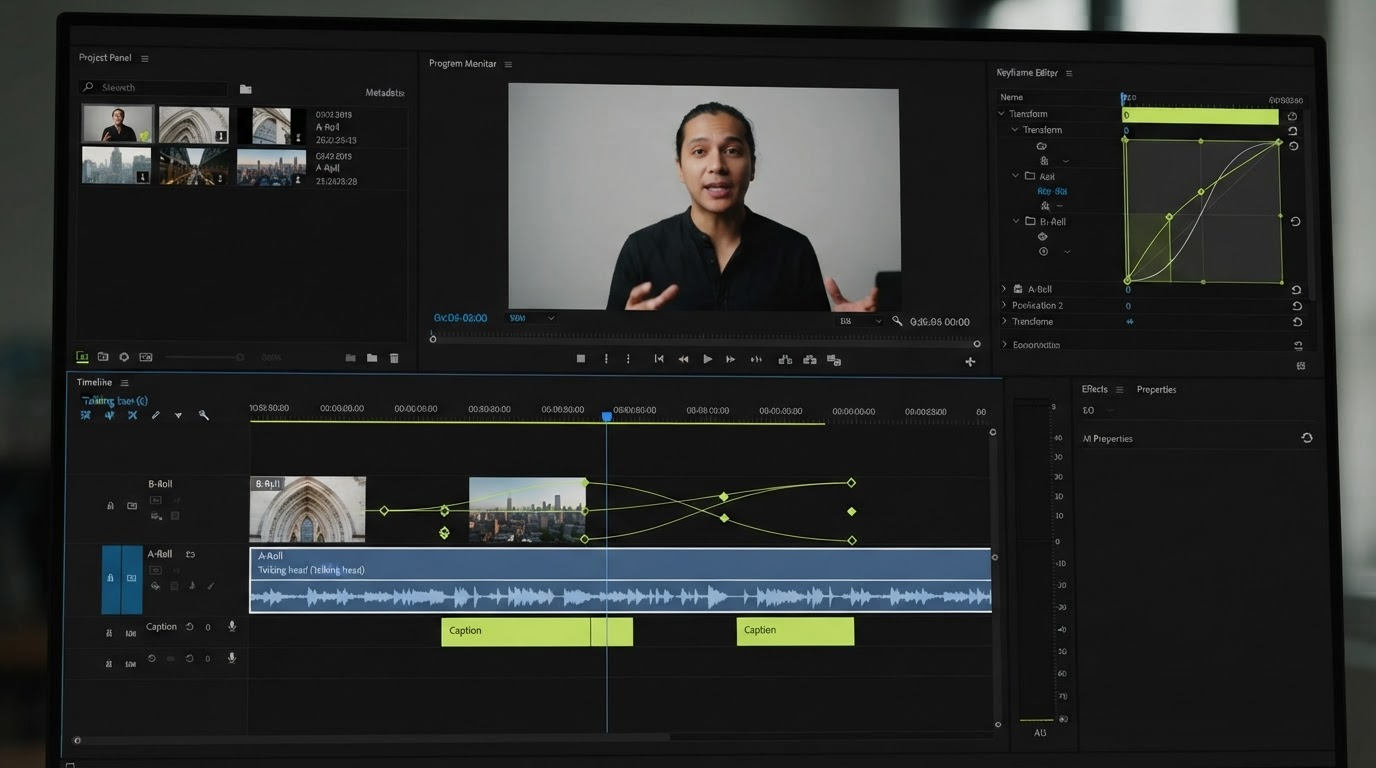
Shot order is next. An agent that generates six clips hands them back in the order it thought of them, which is almost never the order that plays well. Reordering, tightening the head and tail of each clip, and dropping the weakest shot takes a couple of minutes in a timeline where you can merge and reorder video clips directly.
Brand consistency is the third. Colors, lower thirds, intro cards, and end frames drift when each run generates them fresh. Keep those as reusable assets and apply them after the render instead of describing them in every prompt. The same logic applies to your b-roll library so runs share one visual vocabulary.
Wiring it together without a rewrite in six months
The pipelines that survive keep three layers separate. Generation should be swappable, because the best model in March is rarely the best model in September. Assembly belongs wherever your timeline lives. Delivery should not care how the file was made.
Agents are good at the first layer and the third and weak at the second, because assembly is taste. What works is an agent that produces raw material on a schedule and drops it into a shared project where a human does a ten minute pass. If your team works that way, a browser based editor with real time collaborative editing removes the file handoff entirely.
One note on cost. Agents loop, and loops are how bills get surprising. Cap generations per run and log the job ID and cost of every call. For a wider view of where generation fits next to editing, the 2026 guide to AI video generation is a useful companion read.
Frequently asked questions
What makes a video API good for coding agents specifically?
Async jobs, stable schemas, and retry safety. An agent should be able to submit a job, get an ID, disconnect, and pick the result up later without holding state. If the same request sent twice creates two billable renders, the API is not agent ready.
Should my agent poll or use webhooks?
Webhooks if you have a public endpoint and can verify signatures. Polling if you do not, or if the run is short. Polling is simpler to debug and costs almost nothing at a five second interval on a two minute job. Start with polling, add webhooks once the pipeline is stable.
Can an agent do the editing too, or just the generation?
It can assemble, but assembly is not editing. An agent can join clips in order and burn captions. Judging whether a cut lands, whether a caption is readable at phone size, and whether the pacing holds is still a human call.
How many models should one pipeline call?
As few as the job allows. Every additional model is another failure mode, another rate limit, and another output format to normalize. Two or three is the practical ceiling for an unattended run. If you need more, build the chain in one place and expose it as a single endpoint so the agent only has one thing to retry.
The short version
Pick fal if your agent makes one model call. Pick Wireflow if it makes five and you would rather maintain a graph than a chain of API calls. Pick Hedra if unattended reliability outranks catalog size. Add Mux for delivery, and Shotstack if your output is templated.
Then decide where the human pass happens, because there will be one. The agent gets you raw material fast. The last ten minutes in a timeline are what make it watchable.
Founder of Motionbox and Gluely. Building tools for creators.